For many people, budgeting and saving are the easy parts of personal finance. You track your spending, spend less than you earn, and slowly build a meaningful cash balance.
Then an uncomfortable question appears:
Now what?
Leaving money in a savings account feels safe — but over time, it becomes clear that safety alone isn’t enough. Inflation quietly erodes purchasing power, and cash that sits idle slowly loses value. At the same time, jumping straight into the stock market can feel intimidating, especially when that money represents discipline, sacrifice, and years of careful planning.
This two-part series is designed to bridge that gap.
Part 1 focuses on understanding what bonds and Treasury bills are, how lending works, and how returns are generated.
Part 2 will build on this foundation by showing how these ideas can be applied in a simple, conservative strategy using a laddered portfolio of Treasury bills.
If you’re new to investing, starting here will make everything that follows far easier to understand.
What a Bond Really Is
At its core, a bond is simple.
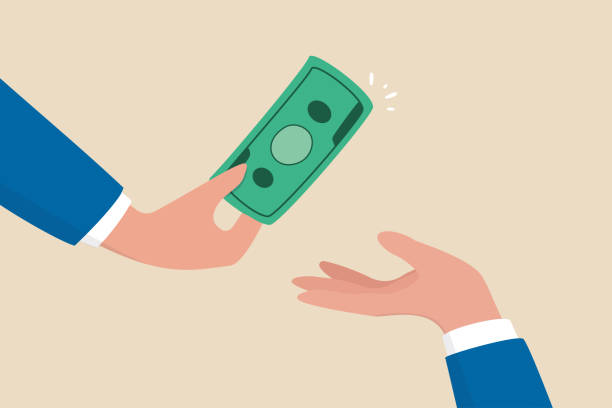
There is a buyer and a seller.
Money flows from the buyer’s hands into the seller’s hands.
A bond — a promise to repay — flows from the seller’s hands into the buyer’s hands.
That’s it.
When you buy a bond, you are lending money. The borrower receives cash today and promises to return that money in the future, along with interest. The bond itself is simply the written obligation to do so.
If you are buying a bond, think of yourself as a lender, not a gambler.
How Traditional Bonds Work
Most bonds are issued in $1,000 increments. One bond has a face value (also called par value) of $1,000. If you buy a bond when it is issued, you are effectively lending $1,000 to the borrower.
In return, you receive:
- Regular interest payments (called coupon payments), and
- Your original $1,000 back when the bond matures
Traditionally, coupon payments are made every six months.
For example, consider a 5-year bond:
- You lend $1,000 today
- You receive an interest payment every six months for five years
- At the end of the fifth year, you receive your final interest payment plus your original $1,000 principal
This predictable structure is one of the reasons bonds are considered more stable than stocks.
Who Issues Bonds?
Bonds can be issued by many different borrowers, including:
- Public companies (Ford, Verizon, Netflix)
- Local municipalities
- State governments
- The United States government
Each borrower carries a different level of risk. Corporate bonds generally offer higher interest rates but come with more uncertainty. U.S. government bonds, on the other hand, are considered to be among the safest investments in the world.
Because U.S. Treasury securities are backed by the full faith and credit of the U.S. government, they are often described as “risk-free” in financial theory.
Treasury Bills: A Special Type of Bond
Treasury bills — often called T-bills — are U.S. government securities with maturities of 52 weeks (one year) or less.
Because they are such short-term loans, Treasury bills work differently than traditional bonds.
Key Difference
Treasury bills do not make coupon payments.
Instead of paying interest every six months, T-bills are issued at a discount to their face value.
You buy the bill for less than $1,000.
At maturity, you receive the full $1,000 par value.
The difference is your return.
A Simple Treasury Bill Example
Let’s say a Treasury bill has:
- 30 days remaining until maturity
- A yield equivalent to 4% annually
That bill might be sold for $996.66.
After 30 days:
- The bill matures
- You receive $1,000
- The $3.33 difference represents the interest earned
There is no separate interest payment. The return is embedded in the price.
How Treasury Bills Are Quoted
This is an important detail when purchasing Treasury bills through a brokerage account.
T-bills are quoted as a price per $100 of face value.
Using the same example:
- A quoted price of 99.666 means you pay 99.666% of face value
- For a $1,000 T-bill, that equals $996.66
($1,000 × 0.99666)
Understanding this pricing format helps prevent confusion when viewing bond listings.
The Yield Curve — Explained Simply
The yield curve illustrates a basic principle of lending:
- The shorter you lend your money, the lower the return
- The longer you lend your money, the higher the return
Investors are compensated for:
- Time
- Reduced liquidity
- Uncertainty
This relationship between maturity length and yield is what makes strategies like bond laddering possible.
Setting the Stage for Part 2
At this point, the mechanics of bonds and Treasury bills should be clear:
- Bonds are loans
- Treasury bills are short-term government loans
- Returns come from either coupon payments or discounts
- Longer commitments generally offer higher yields
In Part 2, these concepts will be put into practice.
We’ll look at how Treasury bills can be combined into a laddered portfolio that:
- Maintains monthly liquidity
- Gradually increases yield
- Minimizes risk and volatility
- Serves as a conservative first step into investing
This approach is especially well-suited for cautious beginners who want their money to work — without giving up peace of mind.





 BudgetBase
Leave a comment