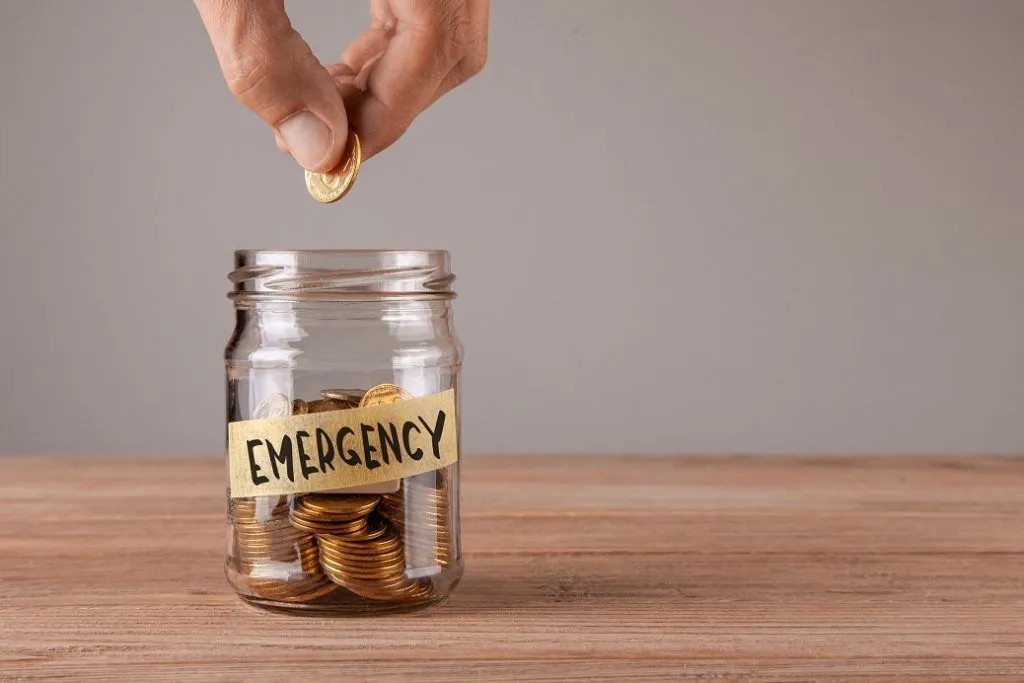
“Save three to six months of expenses.”
It’s one of the most repeated lines in personal finance.
But rarely does anyone explain:
- Why three?
- Why six?
- Three months of what?
- And what actually determines the number?
An emergency fund isn’t a magic formula.
It’s a risk decision.
What an Emergency Fund Is Meant to Do
An emergency fund exists for one purpose:
To protect you from events that interrupt income or create unavoidable, unexpected expenses.
Job loss.
Medical issues.
Major car repairs.
Urgent home repairs.
It is not:
- An investment account
- A renovation fund
- A vacation fund
It is financial shock absorption.
Nothing more.
The Real Question: How Exposed Are You?
Instead of asking how big your emergency fund should be, ask:
- How stable is my income?
- How quickly could I replace it?
- How many people depend on it?
- How flexible are my monthly expenses?
Two households can earn the same income and require very different reserves.
A dual-income household with stable careers may be comfortable with three months.
A single-income, commission-based household may need six — or more.
There is no universal number.
There is only margin.
What Should You Base It On?
Emergency funds should be calculated using essential expenses, not total spending.
If you spend $5,000 per month but could reduce that to $3,500 during a disruption, your emergency fund should be built around $3,500.
That distinction changes everything.
The goal isn’t to maintain lifestyle.
It’s to maintain stability.
The Psychology of a Buffer
Cash changes behavior.
When you have margin:
- You negotiate differently.
- You tolerate volatility differently.
- You make career decisions differently.
- You sleep differently.
This is where the concept becomes powerful.
The goal is to design your financial life so that unexpected events are inconvenient — not catastrophic.
That’s the difference.
An inconvenience is a repair bill that delays a vacation.
A catastrophe is a repair bill that forces debt, stress, and panic.
An emergency fund is what separates the two.
How Much Is Too Much?
Here’s the part rarely discussed.
Holding too much cash has a cost.
Cash earns little over time. Inflation slowly erodes it. Money sitting idle isn’t compounding.
At some point, expanding your emergency fund further slows long-term growth.
This is why the balance matters.
Enough cash to prevent catastrophe.
Not so much cash that progress stalls.
Where Should It Be Held?
The first layer should be immediately accessible — checking or high-yield savings.
Beyond that, short-term Treasury bills can serve as an efficient extension of your reserve. They preserve liquidity, reduce inflation drag, and maintain stability — while still keeping risk extremely low.
This is where structure matters.
Emergency funds don’t have to be idle.
They just have to be reliable.
When to Stop
You may consider your emergency fund complete when:
- Essential expenses are covered for several months
- Income risk is manageable
- Your skillset is marketable
- You feel calm — not anxious — about disruption
An emergency fund is not a destination.
It’s a foundation.
Final Thought
Three months may be enough.
Six months may be better.
The right number depends on your exposure to risk — not a headline rule.
The purpose of an emergency fund is simple:
To build a financial life where setbacks are manageable.
Where disruption is inconvenient.
Not catastrophic.




 BudgetBase
Leave a comment